
Are Local Anesthetics A Standard of Care for Penetrating Keratoplasty?
Are Local Anesthetics A Standard of Care for Penetrating Keratoplasty?
BertholdMoser*
*Correspondence to: BertholdMoser, Pain Medicine Silandro, Independent Researcher 39028 Silandro, Italy.
Copyright
© 2025 BertholdMoser. This is an open access article distributed under the Creative Commons Attribution License, which permits unrestricted use, distribution, and reproduction in any medium, provided the original work is properly cited.
Received: 13 Nov 2024
Published: 09 Jan 2025
DOI: https://doi.org/10.5281/zenodo.14737120
Abstract
The purpose of this study was to ascertain the safety and preferences of local anesthetic (LA) for penetrating keratoplasty. A review of all PKs completed at Ibn Al-Ahaitham Teaching Eye Hospital over the previous four years (2018–2021) in order to determine the incidence of serious complications. To ascertain patterns in PK's anesthetic use, structured interviews with hospitalized cornea experts were conducted. Continuous data were expressed as mean (SD), whilst categorical variables were expressed as a number (%). In local anesthesia, 41% of the population was under 30, while 59% was over 30. Of these, 69.1% were female. In general anesthesia, there were 56.9% more women than men, 43.1% more men than women, and 33.3% more people under 30 than over 30. Expulsive suprachoroidal hemorrhage (SCH) and a posterior capsule rupture brought on by elevated vitreous pressure constituted the primary complications. It should be mandatory for all waiting list patients with chronic illnesses to have regular follow-up appointments for at least six months before the planned operation date.
Keyword: Local anesthesia, Standard, Penetrating Keratoplasty.
Are Local Anesthetics A Standard of Care for Penetrating Keratoplasty?
Introduction
For the benefit of the patient, the surgeon, and the staffing and efficiency of the operating theater, the decision between LA and GA for corneal transplantation is crucial [1]. The choice of anesthesia is predicted to be more contentious the more invasive the keratoplasty process (such as PK)[2]. PKP conducted, nevertheless, with the risk of major complications [3]. Serious complications like ejection of the intraocular contents might result from both surgical errors and noncooperation on the part of the patient [4]. Under local anesthesia, PKP is frequently carried out [5]. While there are certain benefits of local anesthesia, like ease of use, less need for fasting before surgery, and reduced expenses, getting patients fully cooperative is typically challenging, particularly when the procedure takes longer than expected. Because of this, surgeons must do PKP fast, which is extremely stressful and reduces the amount of time they have to treat pathological alterations in the anterior chamber [6-7]. As a result, PKP is riskier and has a lower success rate [8]. Due to its higher cost and complexity, general anesthesia is used less frequently in PKP than local anesthesia; however, patients who undergo general anesthesia can provide their full cooperation, giving surgeons more time to treat pathological changes in the anterior chamber, potentially lowering risks and raising the success rate for PKP [9]. This study aimed to determine the preferences and to examine the safety of local anesthesia (LA) for penetrating keratoplasty.
Methods
A retrospective analysis of PKs performed in Ibn Al-Ahaitham Teaching Eye Hospital for the last four years (2018-2021) to investigate rate of major complications. Structured interviews were done with cornea specialists in the hospital to determine trends in anesthesia use for PK. Lidocaine 2% with Adrenaline 1:200000 or Bupivacaine 0.5 % and Hyaluronidase 4-7 ml were given as a retrobulbar block combined with facial or lid block and ocular compression. Patient who would like sedation are normally given 1 mg of midazolam and fentanyl IV. Using SPSS version 20, each variable in the data was analyzed after being input into an Excel spreadsheet.
Whereas categorical variables were expressed as a number (%), continuous data were expressed as mean (SD).
Results
Out of all the 368 PK cases, 317 (368) or 86.1% used the LA, and 51 (368) or 13.9% used the GA. Table 1 indicates that in LA, 41% of people were under 30 and 59% of people were over 30. There were 69.1% women. While in GA, there were 56.9% females and 43.1% males, with 66.7% of the population being over 30 and 33.3% being under 30. In figure 1 indicate that 1.3% of them had Expulsive suprachoroidal haemorrhage (SCH) and 0.3% had ruptured posterior capsule due to positive vitreous pressure (poor vision). Table 2 presents a comparison of the three hospitals in the analyzed sample.
Table 1: Characteristic of studied sample and anesthetic use for adult PK
|
Characteristic |
Anesthetic |
Total (n=368) |
||||
|
Local(n= 317) |
General(n=51) |
|||||
|
Frequency |
Percent |
Frequency |
Percent |
Frequency |
Percent |
|
|
Age groups |
|
|
|
|
|
|
|
? 30 |
130 |
41 |
17 |
33.3 |
147 |
39.9 |
|
≥30 |
187 |
59 |
34 |
66.7 |
221 |
60.1 |
|
Gender |
|
|
|
|
|
|
|
Male |
98 |
30.9 |
22 |
43.1 |
120 |
32.6 |
|
Female |
219 |
69.1 |
29 |
56.9 |
248 |
67.4 |
Figure 1: Major complications related to local anesthesia
Table 2: Comparison of studied sample among three hospitals
|
Case study |
LA |
GA |
Complications |
|
|
SCH |
Other complication |
|||
|
Ibn Al_Ahaitham |
317 8 surgeons |
51 |
LA (4) GA( 0) |
LA (3) GA (0) |
|
Zain Alabideen |
0 |
-~500 |
2 |
0 |
|
Canada |
2143 4 surgeons |
0 |
1 |
5 |
Discussion
The purpose of this study was to assess the safety and preferences of local anesthetic (LA) for penetrating keratoplasty. The main major complications related to LA were 1.3% of cases had expulsive SCH and 0.3 % had ruptured posterior capsule due to positive vitreous pressure (poor vision). The main reason for the most cornea specialists to prefer GA rather LA is expulsive SCH, as it could be seen in the results. Chronic medical diseases and risk factors like glaucoma, high myopia, and complex surgery were noticed in patients who suffered from SCH in Ibn Al_Ahaitham teaching hospital. Based on the study, there are high rate of complications more than 1.5%, which mostly attributed to patient related causes, who they have poor control of chronic medical diseases like DM and HT. In more details, it is important to mention that the lack of regular follow up of the patients over many years would negatively impact the outcomes of operation. Most of the case studies data were collected during the COVID-19 period, which led to a shortage of the healthcare staff, thus made LA was more suitable than GA. Avoiding GA means avoiding intubation and other aerosol generating procedures, which can increase the risk of nosocomial transmission to healthcare staff during viral pandemics [10]. Based on the published study in 2022 that conducted in Canada, 2143 PKs were performed under LA by 4 surgeons. According to their study, LA was considered as a standard for the PK, 92% of cornea specialist in Canada preferred LA to GA. In contrast, in the UK 4.5% of the specialist preferred GA, with most preferring of GA due to SCH risk [6]
Conclusion and Recommendation
The author concludes that 6 out of 8 surgeons at our hospital prefer LA. The main complication was had Expulsive suprachoroidal haemorrhage (SCH) and ruptured posterior capsule due to positive vitreous pressure. To avoid the occurrence of LA related complications, the following should be considered the good management of chronic disease, mainly DM and HT; Minimum volume of local anesthesia and enough time; Sedative; Good ventilation; Avoid sudden decompression; Short time from the moment of incision. Every patient on the waiting list who has a chronic illness should be required to undergo routine follow-up for a minimum of six months prior to the scheduled surgery date.
Conflict of interest: None
Reference
1. Wagoner, Michael D., et al. "Postoperative complications after primary adult optical penetrating keratoplasty: prevalence and impact on graft survival." Cornea 28.4 (2009): 385-394.
2. Cheng, Arthur CK, Srinivas K. Rao, and Dennis SC Lam. "Penetrating keratoplasty using topical anesthesia." Cornea 24.6 (2005): 766.
3. Rickmann, Annekatrin, et al. "Analysis of different types of anesthesia in descemet membrane endothelial keratoplasty." International Ophthalmology 40 (2020): 541-545.
4. Thomas, Manu, et al. "A clinical study on visual outcome and complications of penetrating keratoplasty." IOSR 14 (2015): 49-60.
5. NHSBT. Anaesthetic Use. Bristol: NHSBT; 2021.
6. Bizrah, Mukhtar, et al. "Local anaesthesia as a standard of care for penetrating keratoplasty?." Eye 36.7 (2022): 1486-1493.
7. Rüschen, Heinrich, et al. "Use of hyaluronidase as an adjunct to local anaesthetic eye blocks to reduce intraoperative pain in adults." Cochrane Database of Systematic Reviews 3 (2018).
8. Jaichandran, V. V. "Ophthalmic regional anaesthesia: A review and update." Indian journal of anaesthesia 57.1 (2013): 7.
9. Wang, Xu, et al. "General anesthesia versus local anesthesia for penetrating keratoplasty: a prospective study." International Journal of Ophthalmology 7.2 (2014): 278.
10. Agrawal, Vinay, and Madhusoodan Tharoor. "Peribulbar anaesthesia for penetrating keratoplasty. A case series." Indian Journal of Ophthalmology 50.4 (2002): 313-316..
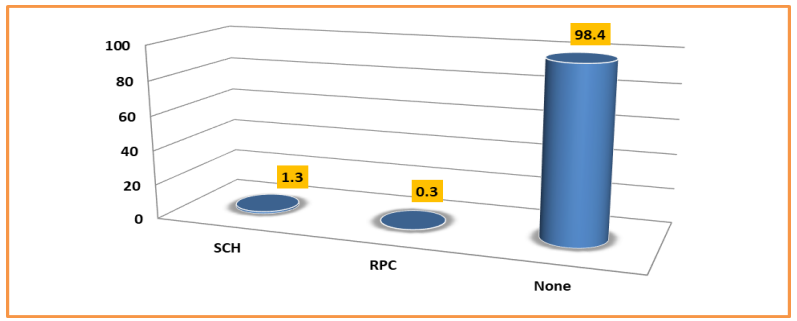
Figure 1