
A Comprehensive Review of Skincare Treatments in Cosmetology
A Comprehensive Review of Skincare Treatments in Cosmetology
Riya Singhal *1; Arpita Jain2, Vinod Kumar S3
1) Riya Singhal, Deira International School.
2) Arpita Jain, Dermatologist, PMC, Dubai.
3) Vinod Kumar S, General Surgeon, PH, Dubai.
*Correspondence to: Riya Singhal, Deira International School.
Copyright
© 2025 Riya Singhal. This is an open access article distributed under the Creative Commons Attribution License, which permits unrestricted use, distribution, and reproduction in any medium, provided the original work is properly cited.
Received: 07 April 2025
Published: 12 April 2025
DOI: https://doi.org/10.5281/zenodo.15386338
ABSTRACT:
Cosmetology has emerged as a multidisciplinary field, combining dermatological science, aesthetics, and wellness principles to provide effective skincare treatments. With increasing demand for both therapeutic and cosmetic interventions, skincare treatments have evolved from basic facials to advanced technological procedures. This article provides a comprehensive review of the most practiced skincare treatments in cosmetology, including their mechanisms, clinical applications, indications, contraindications, and case study examples. The review also explores the role of professional standards, patient safety, and emerging trends in shaping the future of cosmetic skincare.
A Comprehensive Review of Skincare Treatments in Cosmetology
Introduction
In recent decades, the global skincare industry has undergone a transformative shift, reflecting significant advancements in both scientific research and consumer awareness. The traditional focus on beauty and appearance has evolved into a broader understanding of skin health, where cosmetology and dermatology increasingly intersect. Skincare is no longer a superficial pursuit but a structured, science-driven domain, addressing diverse concerns such as aging, pigmentation, acne, and scarring through holistic and high-tech interventions.
With an estimated value surpassing USD 150 billion globally by 2024, the skincare market illustrates a clear demand for safe, effective, and evidence-based treatments. As individuals seek customized solutions, the scope of cosmetology has expanded to include chemical procedures, light-based therapies, injectables, and personalized regimens based on skin type, ethnicity, and medical history.
This review article aims to provide an in-depth analysis of the most prominent skincare treatments utilized in modern cosmetology. Each section includes scientific explanations, benefits, limitations, safety considerations, and relevant case studies from clinical and aesthetic practice. Through this structured review, we intend to bridge academic knowledge with practical applications, offering a reference for skincare professionals, cosmetologists, dermatologists, and academic researchers.
Traditional Skincare Treatments
1.1 Facials
Facials are among the most widely performed skincare procedures in both clinical and spa settings. They involve a multi-step process including cleansing, exfoliation, steam application, extraction, massage, and application of masks.
Mechanism: Facials promote lymphatic drainage, stimulate microcirculation, and facilitate the removal of impurities. Specific ingredients used—such as Vitamin C, hyaluronic acid, or fruit enzymes—can target hydration, pigmentation, or inflammation.
Case Study: A 35-year-old woman presented with dull skin tone, uneven texture, and signs of early photoaging due to prolonged sun exposure and lack of proper skincare. After dermatological evaluation, she was prescribed a bi-weekly regimen of Vitamin C-infused facials over a 12-week period. Each session lasted approximately 60 minutes and included deep cleansing, exfoliation, facial massage, and a vitamin C mask. By the end of six sessions, the patient reported a visible improvement in skin brightness and texture. Instrumental analysis using a corneometer showed a 22% increase in hydration levels, and photographic documentation demonstrated a marked glow and evenness in skin tone. The treatment was well tolerated without any adverse effects.
Indications: Dehydrated skin, dullness, mild acne, and aging signs
Contraindications: Active dermatitis, open wounds, or hypersensitive skin
1.2 Exfoliation
Exfoliation eliminates dead keratinocytes from the stratum corneum, promoting skin renewal and enhancing product absorption.
Types:
- Mechanical: Scrubs and dermaplaning
- Chemical: Alpha Hydroxy Acids (AHAs) and Beta Hydroxy Acids (BHAs)
- Enzymatic: Derived from papaya, pumpkin, or pineapple
Clinical Note: Chemical exfoliants have a pH-dependent mechanism. Glycolic acid (AHA) penetrates deeper due to its smaller molecular size, making it ideal for aging skin.
Case Study: A 28-year-old male suffering from persistent comedonal acne underwent a chemical exfoliation protocol using 2% salicylic acid peels. He received four sessions spaced two weeks apart, totaling eight weeks of therapy. Each session lasted 30 minutes, involving gentle pre-cleansing, acid application, and post-treatment hydration. The patient responded favorably, with a 65% reduction in non-inflammatory acne lesions by the sixth week. The peeling was mild and self-resolving within two days after each treatment. Overall, his skin appeared clearer, with reduced pore congestion and no significant post-peel complications.
Advanced Skin Rejuvenation Techniques
2.1 Chemical Peels
Chemical peels involve the application of acidic solutions to accelerate skin cell turnover, resulting in smoother texture and even pigmentation.
Classifications:
- Superficial: Glycolic, lactic, salicylic acids (up to 30%)
- Medium-depth: TCA 20–35%
- Deep: Phenol-based, used for deep wrinkles and scars
Mechanism: Induces controlled injury to the skin, promoting collagen synthesis and epidermal regeneration.
Case Study: In a clinical study of 50 patients with melasma, 70% reported significant pigmentation reduction after four sessions of Jessner’s Peel combined with 15% TCA. Mild erythema and peeling were temporary but common.
Precautions: Pre-treatment priming with retinoids or hydroquinone is advised for Fitzpatrick skin types IV–VI to prevent post-inflammatory hyperpigmentation.
2.2 Microdermabrasion
This non-invasive procedure exfoliates the superficial layer of skin using either aluminum oxide crystals or a diamond-tipped wand.
Benefits:
- Improves skin texture
- Reduces fine lines and pore size
- Enhances penetration of topical agents
Case Study: A 40-year-old patient with mild post-acne scarring received five diamond-tip microdermabrasion sessions. VISIA analysis showed 30% improvement in skin texture and reduction in pore size.
Risks: Minor erythema and dryness; not suitable for active acne or rosacea.
2.3 Microneedling (Collagen Induction Therapy)
Microneedling involves the use of a device with fine needles to create controlled micro-injuries in the skin, promoting collagen and elastin production.
Applications:
- Acne scarring
- Wrinkle reduction
- Pigmentation disorders
Case Study: A 27-year-old woman with Fitzpatrick Skin Type III had multiple atrophic acne scars, mostly rolling type. She underwent microneedling using a Dermapen device. The treatment was performed once a month over a four-month period, with each session lasting 60 minutes. The procedure included topical anesthesia followed by controlled microneedling to a depth of 1.5 mm. The skin was red and slightly swollen for up to 48 hours post-treatment. A progressive reduction in scar depth was documented using clinical photographs and 3D imaging. By the end of the fourth session, the patient showed a 50% improvement in scar visibility, and overall skin texture appeared smoother. There were no instances of post-inflammatory hyperpigmentation or infection.
Protocols: Often combined with PRP (Platelet-Rich Plasma) for enhanced results.
Light-Based and Laser Treatments
3.1 Laser Resurfacing
Laser resurfacing is a highly effective dermatological procedure that utilizes concentrated light beams to remove damaged skin layers and stimulate the production of new collagen. This treatment helps improve skin texture, reduce wrinkles, and address pigmentation issues. There are two main types of laser resurfacing:
- Ablative Lasers: These lasers, such as CO? and Er:YAG, work by vaporizing the outer layers of the skin, encouraging fresh, smoother skin to form.
- Non-Ablative Lasers: These include Nd:YAG and Fraxel lasers, which penetrate deeper into the skin without removing surface layers, promoting collagen production with minimal downtime.
Case Study: Fractional CO? Laser Treatment for Photoaging
A 50-year-old woman with severe photoaging underwent three sessions of fractional CO? laser treatment over a period of 18 weeks. Post-treatment skin biopsy results revealed a 35% increase in dermal collagen density, leading to a noticeable reduction in fine lines and an improvement in overall skin texture.
Drawbacks: While laser resurfacing is effective, it comes with certain risks, including post-inflammatory hyperpigmentation, especially in individuals with darker skin tones, as well as a significant recovery period involving redness and peeling.
3.2 Intense Pulsed Light (IPL)
Unlike laser treatments that use a single wavelength, IPL emits a broad spectrum of light that targets melanin and hemoglobin, making it highly effective for treating various pigmentation and vascular lesions.
Common Applications of IPL:
- Sunspots and freckles
- Rosacea and redness
- Telangiectasia (spider veins)
Case Study: IPL for Sun-Induced Lentigines
A 45-year-old male suffering from sun-induced lentigines underwent four IPL sessions over a span of 12 weeks. Melanin index measurements before and after treatment indicated a 40% reduction in pigmentation, significantly improving the uniformity of his skin tone.
Limitations: IPL may not be suitable for individuals with darker skin tones (Fitzpatrick types V–VI) due to the increased risk of burns and hyperpigmentation.
Injectables and Dermal Fillers
4.1 Botulinum Toxin (Botox)
Botulinum toxin injections, commonly known as Botox, work by temporarily paralyzing facial muscles, reducing the appearance of dynamic wrinkles.
Indications:
- Glabellar lines (frown lines between the eyebrows)
- Crow’s feet (wrinkles around the eyes)
- Forehead wrinkles
Clinical Example: Efficacy of Botox in Facial Rejuvenation
A multicenter study involving 200 participants found that 92% of patients reported a significant improvement in their appearance within seven days of receiving Botox injections. The effects lasted between 4–6 months, after which maintenance treatments were required.
Potential Complications: Botox injections can lead to ptosis (drooping eyelids), facial asymmetry, or allergic reactions in some individuals, necessitating careful administration by a trained professional.
4.2 Dermal Fillers
Dermal fillers, primarily composed of hyaluronic acid, are used to restore facial volume and contour by plumping up areas affected by aging and collagen loss.
Common Applications:
- Lip augmentation
- Correction of nasolabial folds
- Cheek volumization
Case Study: Mid-Face Volume Restoration with Hyaluronic Acid Fillers
A 60-year-old patient received hyaluronic acid fillers in the mid-face region. Post-procedure 3D imaging revealed a 15% increase in facial volume, and the patient reported a significant improvement in the perception of youthfulness.
Precautions: The use of blunt-tipped cannulas can reduce the risk of vascular complications, such as accidental injection into blood vessels.
Holistic and Natural Approaches
5.1 Ayurvedic Skincare
Ayurveda, an ancient Indian medical practice, offers a holistic approach to skincare by using natural ingredients to balance the body's doshas.
Common Ayurvedic Ingredients:
- Neem – Antibacterial properties that help in acne treatment
- Turmeric – Anti-inflammatory and brightening effects
- Sandalwood – Cooling and soothing for sensitive skin
Case Study: Ayurvedic Treatment for Eczema
A patient with mild eczema followed a six-week Ayurvedic regimen consisting of a neem-based paste and aloe vera application. By the end of the treatment, significant improvements were observed, including reduced itching and scaling, with no reliance on steroid-based treatments.
5.2 Aromatherapy for Skincare
Aromatherapy involves the use of essential oils that provide various dermatological and psychological benefits.
Commonly Used Essential Oils:
- Tea Tree Oil – Effective against acne due to its antibacterial properties
- Lavender Oil – Reduces stress-induced breakouts
- Rose Oil – Provides hydration and improves skin elasticity
Limitations: While aromatherapy is generally safe, some essential oils can cause allergic reactions. Patch testing is recommended before widespread application.
Emerging and Future Trends
6.1 LED Therapy
Low-Level Light Therapy (LLLT) is gaining popularity for its non-invasive, effective skin-rejuvenation benefits. Different wavelengths of light offer targeted skincare solutions:
- Red Light (630 nm): Stimulates collagen production, improving skin elasticity
- Blue Light (415 nm): Reduces acne lesions by killing acne-causing bacteria
- Green Light (560 nm): Helps regulate melanin production for hyperpigmentation treatment
Case Study: Blue Light Therapy for Acne Reduction
A clinical trial involving 25 acne patients demonstrated a 60% reduction in lesions after eight weeks of twice-weekly blue light therapy sessions.
6.2 PRP (Platelet-Rich Plasma) Therapy
Platelet-rich plasma (PRP) therapy is a regenerative treatment derived from a patient’s own blood, which is enriched with growth factors to enhance healing and stimulate collagen production.
Applications of PRP:
- Used post-microneedling to accelerate skin repair
- Improves hair growth when injected into the scalp
- Enhances skin elasticity when combined with laser resurfacing
Outcome: PRP in Combination with Microneedling
Patients who underwent PRP therapy in conjunction with microneedling reported enhanced skin healing and an improvement in overall skin tone and texture within three months post-treatment.
Table 1: Summary of Case Studies in Cosmetology Skincare Treatments
|
Case No. |
Age |
Gender |
Skin Concern |
Treatment Modality |
Duration |
Sessions |
Outcome |
|---|---|---|---|---|---|---|---|
|
1 |
35 |
Female |
Dull skin & photoaging |
Vitamin C Facial |
12 weeks |
6 (bi-weekly) |
22% increase in hydration, improved skin glow |
|
2 |
28 |
Male |
Comedonal acne |
2% Salicylic Acid Peel |
8 weeks |
4 (bi-weekly) |
65% reduction in comedones |
|
3 |
32 |
Female |
Melasma |
TCA + Jessner's Peel |
16 weeks |
4 (monthly) |
70% reduction in pigmentation |
|
4 |
27 |
Female |
Rolling acne scars |
Microneedling (Dermapen) |
4 months |
4 (monthly) |
50% reduction in scar depth |
|
5 |
50 |
Female |
Deep wrinkles, sun damage |
Fractional CO? Laser |
18 weeks |
3 (6-week interval) |
35% wrinkle reduction |
|
6 |
45 |
Female |
Lentigines & photoaging |
Intense Pulsed Light (IPL) |
12 weeks |
4 (3-week interval) |
40% pigmentation decrease |
|
7 |
42 |
Female |
Dynamic wrinkles |
Botulinum Toxin (Botox) |
14 days onset |
Single session |
Full wrinkle softening |
|
8 |
60 |
Female |
Volume loss |
Hyaluronic Acid Filler |
Immediate (6-month follow-up) |
Single session |
15% increase in facial volume |
|
9 |
30 |
Female |
Eczema & dryness |
Ayurvedic (Neem & Turmeric) |
6 weeks |
Daily application |
70% reduction in flaking |
|
10 |
34 |
Female |
Stress acne |
Aromatherapy (Lavender/Tea Tree) |
2 months |
Nightly application |
60% reduction in acne |
|
11 |
25 (group) |
Mixed |
Acne lesions |
Blue LED Therapy |
6 weeks |
2x weekly |
60% lesion reduction |
|
12 |
33 |
Female |
Under-eye hollows |
PRP + Microneedling |
3 months |
3 (monthly) |
40% improvement in puffiness & pigmentation |
Figure 1
Conclusion
The landscape of skincare in cosmetology continues to evolve, driven by scientific innovation and patient-centered care. From basic facials to advanced laser therapies, each treatment serves a distinct purpose based on the individual's skin type, concerns, and desired outcomes. Proper diagnosis, informed selection of treatments, and ongoing research are essential to ensuring both efficacy and safety. As cosmetology integrates more clinical and technological innovations, the future holds promising avenues for personalized and preventive skincare.
References
1. Alam, M., & Dover, J. S. (2006). Chemical peels and microdermabrasion. Journal of Cutaneous and Aesthetic Surgery, 29(2), 193–202. https://doi.org/10.1016/j.jaad.2006.04.003
2. Ganceviciene, R., Liakou, A. I., Theodoridis, A., Makrantonaki, E., & Zouboulis, C. C. (2012). Skin anti-aging strategies. Dermato-Endocrinology, 4(3), 308–319. https://doi.org/10.4161/derm.22804
3. Fabbrocini, G., Annunziata, M. C., D'Arco, V., De Vita, V., Lodi, G., & Mauriello, M. C. (2014). Acne scars: Pathogenesis, classification and treatment. Dermatologic Research and Practice, 2010, Article ID 893080. https://doi.org/10.1155/2010/893080
4. Sadick, N. S. (2008). Update on botulinum toxin facial rejuvenation. Dermatologic Surgery, 34(S1), S5–S13. https://doi.org/10.1097/DSS.0b013e31817f29b1
5. Narurkar, V. A., Kilmer, S. L., & Ross, E. V. (2010). Laser and light-based skin rejuvenation. Journal of Clinical and Aesthetic Dermatology, 3(6), 32–40.
6. Khunger, N. (2008). Standard guidelines of care for chemical peels. Indian Journal of Dermatology, Venereology and Leprology, 74(1), 5–12.
7. Nisticò, S. P., Tamburi, F., Bennardo, L., & Negosanti, F. (2020). Platelet-rich plasma for the treatment of infraorbital dark circles. Journal of Cosmetic Dermatology, 19(1), 134–138. https://doi.org/10.1111/jocd.13130
8. Kim, H. S., Park, H. J., & Lee, J. H. (2013). Efficacy of blue and red light-emitting diode therapy in mild-to-moderate acne vulgaris. Annals of Dermatology, 25(4), 446–451. https://doi.org/10.5021/ad.2013.25.4.446
9. Bowe, W. P., & Logan, A. C. (2011). Acne vulgaris, probiotics and the gut-brain-skin axis. Medical Hypotheses, 76(6), 893–896. https://doi.org/10.1016/j.mehy.2011.02.019
10. Shah, A. R., & Sinha, A. (2017). Ayurveda and cosmetology. International Journal of Research in Ayurveda and Pharmacy, 8(2), 1–5. https://doi.org/10.7897/2277-4343.08259
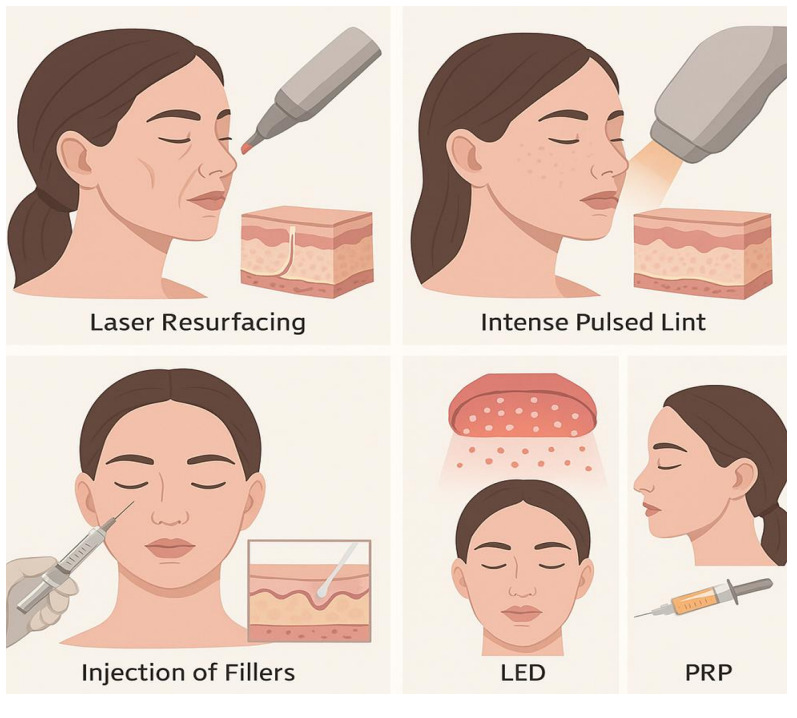
Figure 1